Apr '26
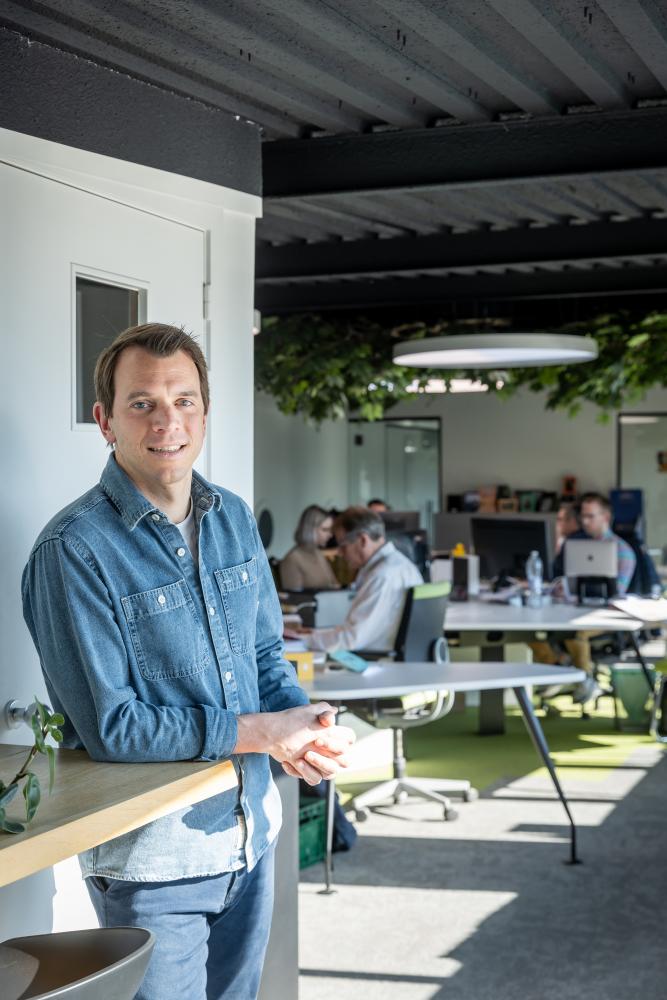
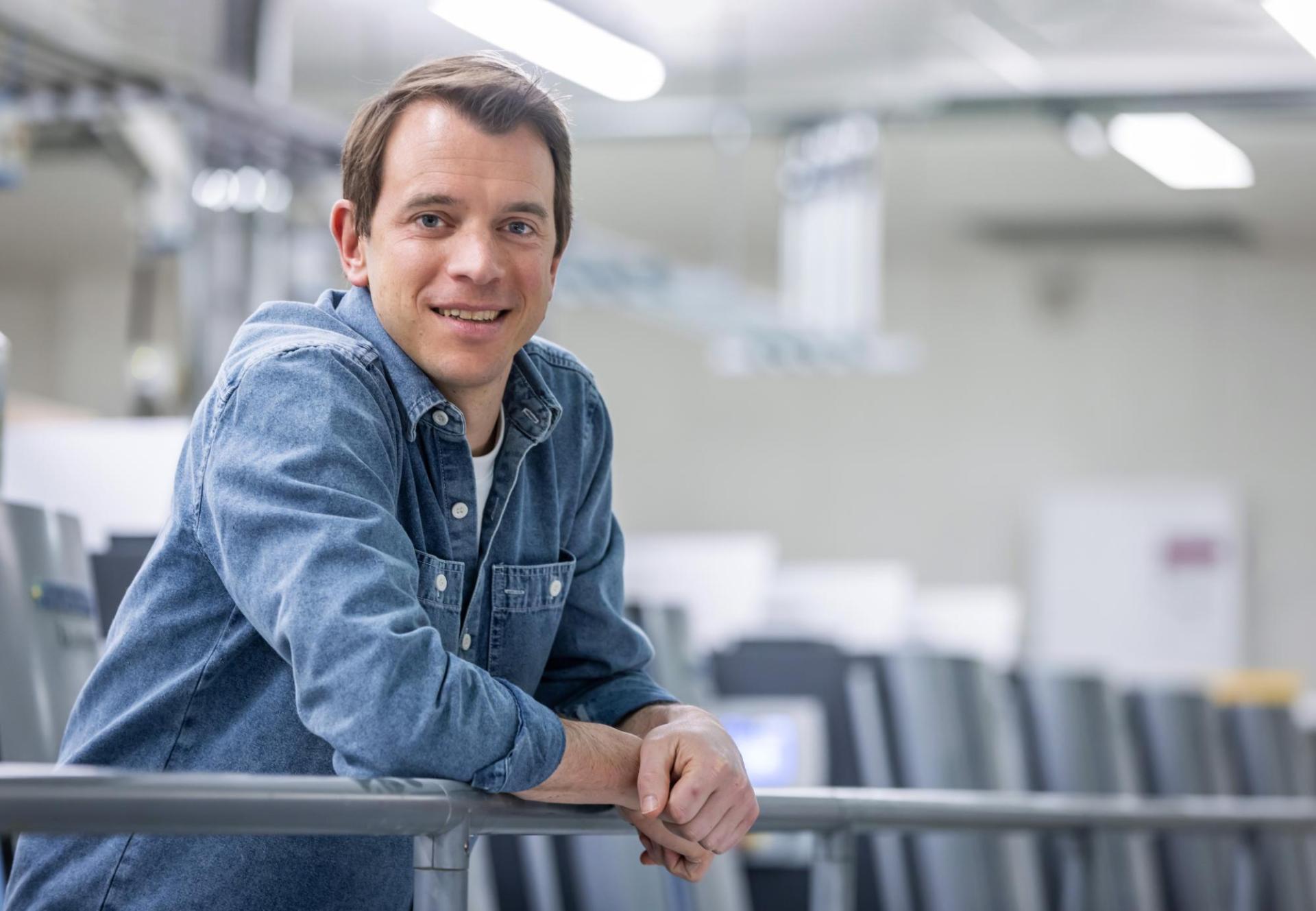
Thijs Claes on Commitment, Trust and Transparency
From Philosopher to CEOVan filosoof tot CEO
Thijs Claes’s journey into entrepreneurship was anything but straightforward. He studied Germanic languages and philosophy and worked as a secondary school teacher for a year. When his father asked him in 2009 to join the family business, just like his two older sisters, he did so more out of family considerations than entrepreneurial ambition. “I thought: at least this way, they can never blame me later for not having tried,” he recalls with a smile.
Initially, he had little affinity with the printing industry. The market also proved more challenging than expected. “The graphic arts sector was under severe pressure at the time due to digitalisation and the aftermath of the financial crisis,” he says. “I really entered a shrinking market. That was the context I found myself in.” Four years later, based on a clear vision for the future, he became CEO, and the second generation took full control of the company. “From that moment onwards, we embarked on a journey that would fundamentally transform our company, both strategically and culturally.”
Grow or Disappear
When Thijs became CEO, he immediately made a clear assessment of the situation. In a sector that was under structural pressure, he believed there were only two options. “My strategic plan was actually quite simple,” he says. “We were destined to grow if we didn’t want to be acquired ourselves.” That conviction led to a clear growth strategy: not through organic growth, but through buy-and-build. “In fifteen years, we completed seventeen acquisitions and grew into a group with six locations in Belgium and France.”
That strategy was a response to the reality of the sector. Many printing companies were struggling and unable to find successors. This created opportunities to acquire and integrate companies at relatively low cost. For Thijs, however, growth was never an end in itself. “It was mainly a way to remain relevant. When you operate in a shrinking market, you have to reinvent yourself. Otherwise, you inevitably become irrelevant.”
At the same time, that strategy created a constant stream of challenges. And that, precisely, appears to be his greatest motivation. “I’m a crisis manager by nature,” he says. “If everything stays the same year after year, I lose some of my energy.” The international expansion into France in 2019 and the subsequent COVID-19 period brought renewed turbulence. These are exactly the kinds of situations that energise Thijs. “When it’s five minutes to midnight and change needs to happen quickly, that’s when I’m at my best.”
From Micromanagement to Trust
Perhaps even more far-reaching than the strategic growth was the cultural transformation within the company. Where management had previously been more hierarchical, Thijs gradually built an organisation based on trust and responsibility. “I’m a strong advocate of transparency and direct communication,” he says. “Essentially, you should try to make every decision at the lowest possible level within the organisation.”
That vision translates into very concrete practices. When new machines are purchased, operators are involved in the selection process at an early stage. “Ultimately, they are the ones who determine whether such an investment will pay off,” he explains. “So it makes perfect sense that they should have a say in which machine is purchased.” The team also plays an important role in recruitment. Colleagues help define the profile that is needed and ultimately make the decision together. “When people are involved in making a decision, they also feel responsible for its success.”
Daddy Kate also deliberately embraces far-reaching transparency. Every month, the company’s results are shared with all employees. “For many managers, that probably feels uncomfortable,” Thijs points out. “But for us, it’s self-evident. Why wouldn’t you do it?” This culture of deep involvement also has a financial dimension. “Twenty percent of our profits is distributed directly among our employees. If they help make the difference, they should also be able to share in it.”
Leadership Means Facilitating
For Thijs, leadership does not mean making every decision yourself. “I’m paid to facilitate the right decisions, not to make them myself.” That vision requires a different role from him and from other managers: more coach than controller. This remains an important area of focus, particularly when integrating different company cultures.
“Many of the companies we acquire are small organisations where people have been managing in a certain way for twenty years,” he says. “You then have to guide them as they grow.” Not everyone succeeds in making that transition. Some profiles struggle with a culture of openness and shared responsibility. “There are people who prefer to keep information to themselves because it gives them a sense of power,” he says. “That doesn’t fit with the way we work, and sometimes you have to part ways.”
By nature, he is rather impatient, yet he deliberately takes a gradual approach to this transition. “You can’t force cultural change. We tend to opt for evolution rather than revolution. If you tell people today that everything has to change, you only create resistance. At Daddy Kate, this cultural transformation took around ten years.”
I embarked on a journey that would fundamentally transform our company, both strategically and culturally. – Thijs Claes (Daddy Kate)Ik begon een traject dat ons bedrijf zowel strategisch als cultureel grondig zou transformeren. – Thijs Claes (Daddy Kate)
Entrepreneurship Across Generations
Ultimately, what drives Thijs has little to do with financial results. “Whether we make one or two million euros in profit doesn’t fundamentally change my motivation.” What does motivate him is the idea of building something that is bigger than himself. “I want to be part of a story that transcends me,” he emphasises.
Within the family, there is a clear agreement on this. “We have decided that we will never sell the company. We want to pass it on to the next generation.” That is why the third generation is already involved in the business today. “From the age of twelve, the younger family members are invited to special family days where they get to know the different activities of the group. We try to make it fun, with a quiz or a visit to the companies.” This long-term perspective provides direction for the strategy. “The larger the company becomes, the more opportunities there are for future generations.”

Work-Life Balance
Entrepreneurship obviously requires a great deal of energy. Nevertheless, Thijs consciously tries to make room for his family and personal time. “Management starts with self-management,” he says. “If you can’t manage your own schedule, you can’t manage people either.” So every morning, he takes his children to school. He deliberately parks a little further away so they can walk part of the way together. “That’s a moment when we can talk and play. Only afterwards does my working day begin.”
Sport also plays an important role. Often, once the children are asleep, he goes running or cycling. In his view, work-life balance is therefore mainly a matter of choices. “People sometimes say they don’t have time, but often it’s simply a matter of priorities. I never watch TV in the evening, for example. I’d rather do other things that give me more satisfaction.”